Wide Range
of Materials
Available in compounds engineered for different service environments.

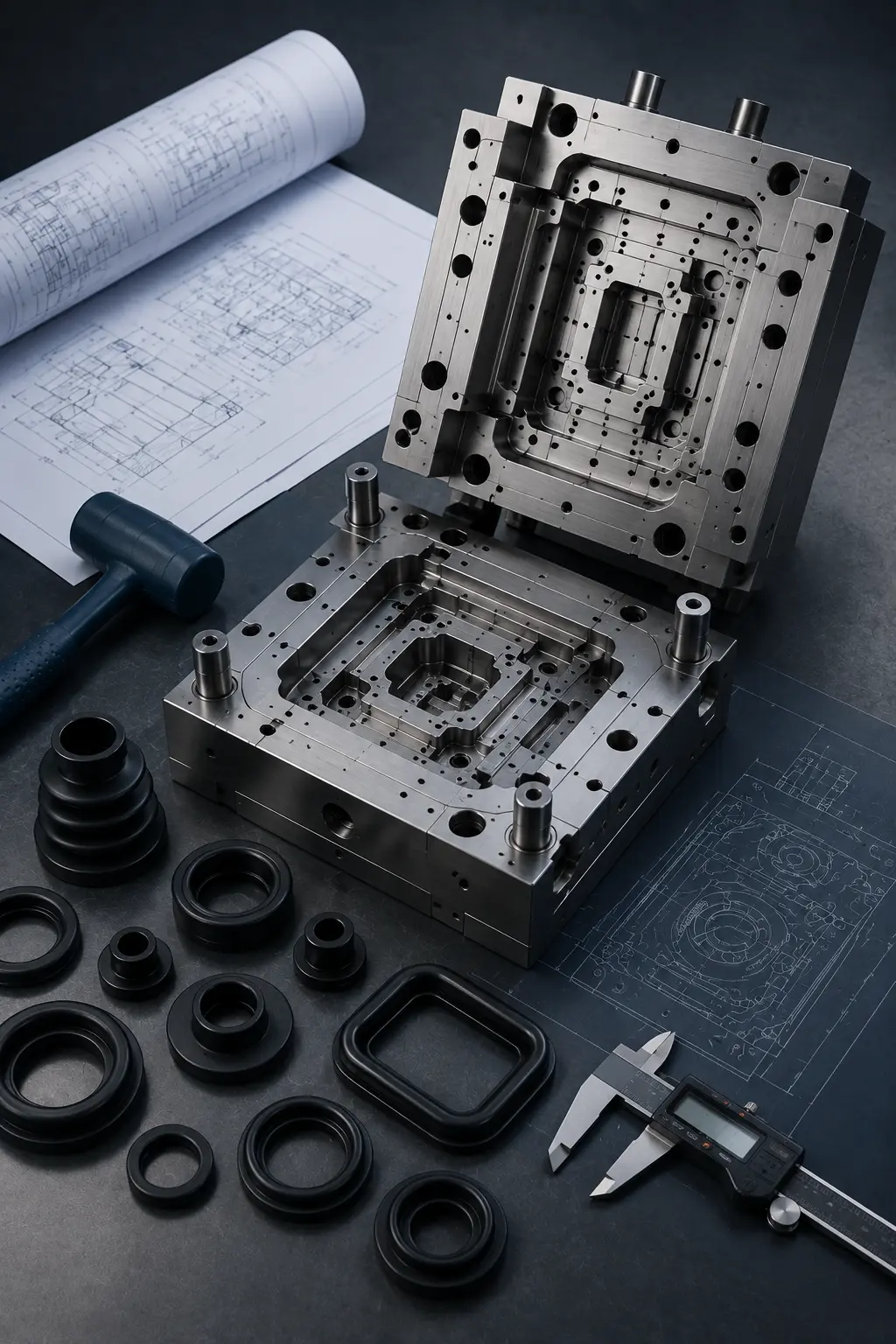
Ontime and Stressfree Development with Money Back Guarantee...
Explore high-performance rubber materials designed for sealing, vibration control, and industrial applications. Compare material properties, operating temperatures, and resistance to weather, oils, fuels, and chemicals.
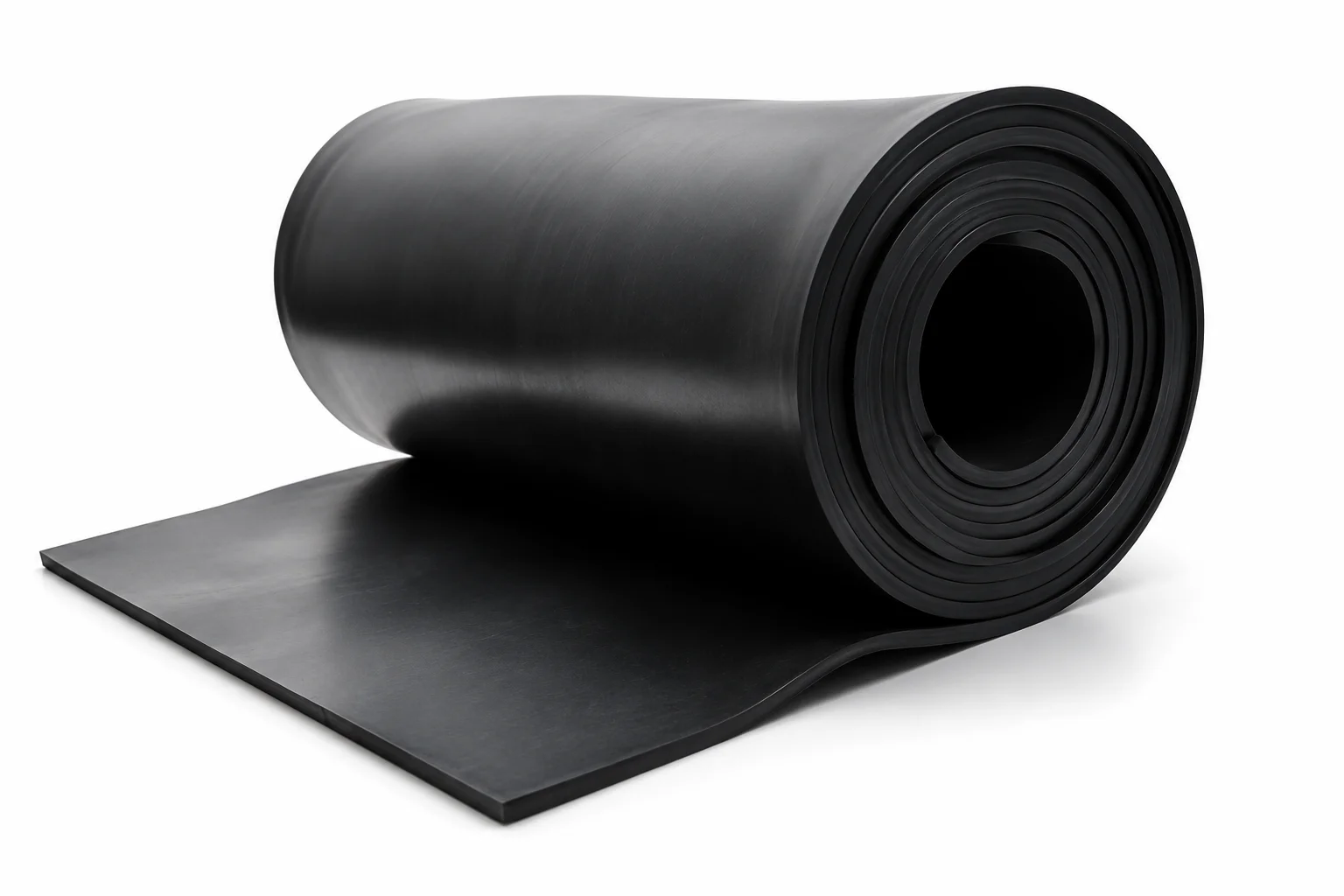
Rubber is a versatile engineering material known for its flexibility, resilience, and sealing performance. It can be stretched and compressed while returning to its original shape, making it ideal for applications requiring effective sealing, vibration control, cushioning, and protection.
Available in various compounds, rubber is widely used across automotive, industrial, construction, electrical, medical, and food-processing applications to improve performance, reduce wear, and extend component life.
Rubber materials provide an excellent balance of flexibility, durability, and environmental resistance.
Available in compounds engineered for different service environments.
Adapts to movement without permanent deformation.
Prevents leakage of liquids, gases, dust, and contaminants.
Reduces shock, noise, and mechanical stress.
Performs reliably in demanding environments.
Choose a hardness that suits your application.
Different rubber compounds are engineered to perform under specific conditions.
Valued for excellent elasticity, resilience, and abrasion resistance. Ideal for repeated movement and cushioning.
Provides outstanding resistance to sunlight, ozone, moisture, and aging; suited to outdoor applications.
Excellent resistance to oils, fuels, grease, and hydraulic fluids, for demanding industrial sealing.
Maintains excellent flexibility across a wide temperature range while providing electrical insulation.
Provides exceptional resistance to chemicals, fuels, oils, and high temperatures.
Compare the key performance characteristics of common rubber materials.
| Material | Typical Operating Temperature* | Weather Resistance | Oil & Fuel Resistance | Chemical Resistance | Best Suited For |
|---|---|---|---|---|---|
| Natural Rubber (NR) | −50°C to +80°C | Moderate | Poor | Moderate | Vibration control and cushioning |
| EPDM | −50°C to +150°C | Excellent | Poor | Good | Outdoor sealing and weather exposure |
| NBR | −40°C to +120°C | Moderate | Excellent | Good | Oil and fuel systems |
| Silicone (VMQ) | −60°C to +200°C | Excellent | Moderate | Moderate | High-temperature applications |
| Fluoroelastomer (FKM) | −20°C to +200°C | Excellent | Excellent | Excellent | Chemical processing |
Rubber compounds are available in different hardness levels, commonly measured using the Shore A scale. Selecting the appropriate hardness helps achieve the right balance of flexibility, sealing performance, durability, and wear resistance.
| Hardness | Typical Characteristics |
|---|---|
| 30–40 Shore A | Very soft and highly flexible |
| 50–60 Shore A | Good balance of flexibility and sealing |
| 70 Shore A | Standard hardness for most industrial seals |
| 80–90 Shore A | High wear resistance and load-bearing applications |
We manufacture and supply a wide range of standard and custom-engineered rubber components to meet diverse application requirements.
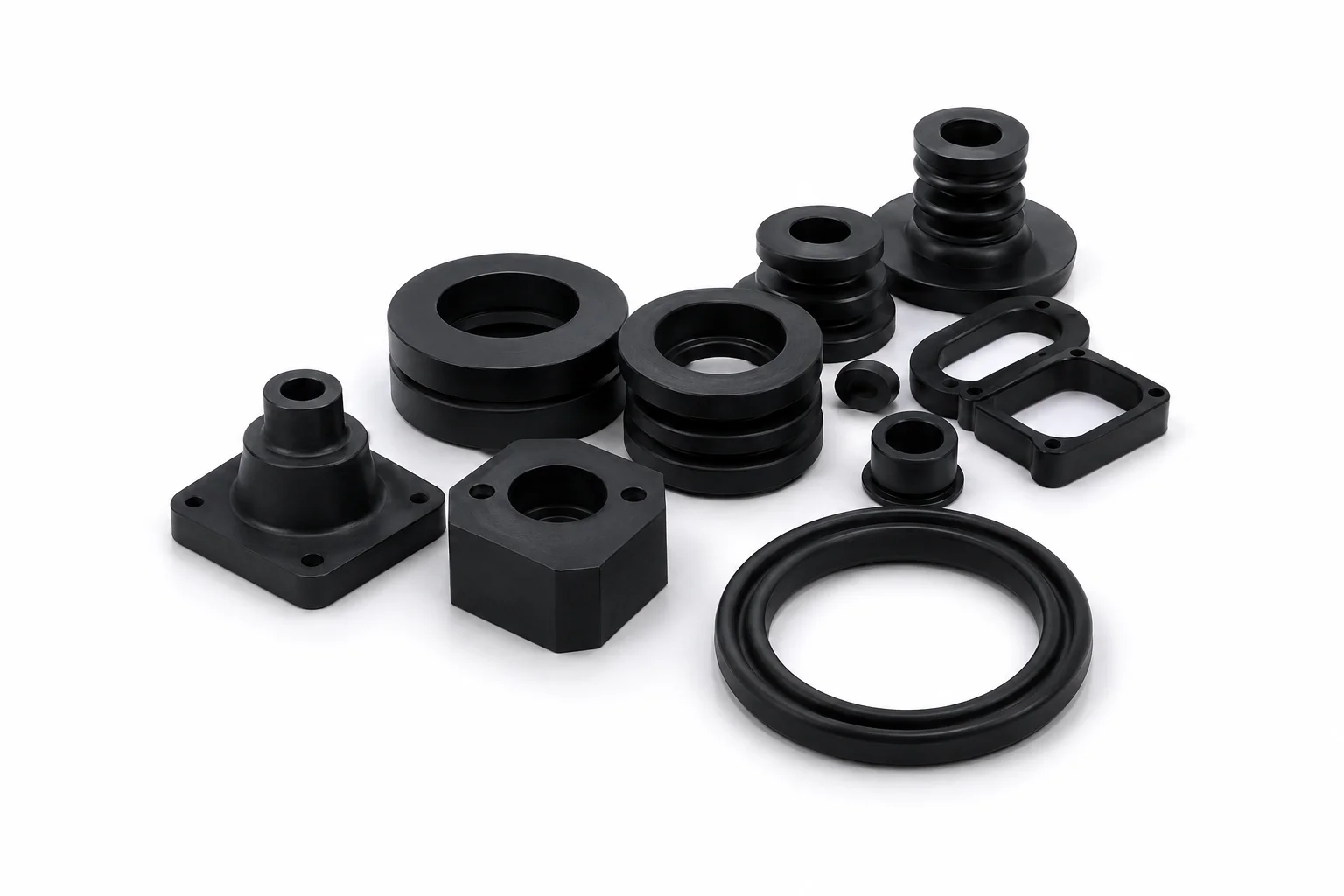
Selecting the right material depends on your application's operating conditions, including temperature, exposure to oils or chemicals, pressure, and environment.
Lorem ipsum dolor sit amet, consectetur adipiscing elit, sed do eiusmod tempor incididunt ut labore et dolore magna aliqua. Duis aute irure dolor in reprehenderit
If your part has unique dimensions, material requirements, or performance specifications, a custom mold is usually the best option. Custom tooling is designed around the specific part and manufacturing process, helping improve consistency, repeatability, and overall production performance.
Custom tooling can be developed for a wide range of rubber materials, including EPDM, silicone, nitrile, neoprene, and natural rubber. The material selection depends on the application's requirements, such as temperature resistance, weather exposure, chemical compatibility, and durability.
Tooling has a direct impact on dimensional accuracy, material flow, cycle efficiency, and overall product quality. Well-designed tooling helps support stable production processes and consistent manufacturing results over time.
Prototype tooling is typically used during product development to evaluate part fit, function, and manufacturability before full production begins. Production tooling is designed for long-term manufacturing and is built to support higher volumes while maintaining consistent quality.
Yes. When the tooling is properly designed and manufactured, it can support high-volume production while maintaining part quality, process stability, and manufacturing consistency over extended production runs.